

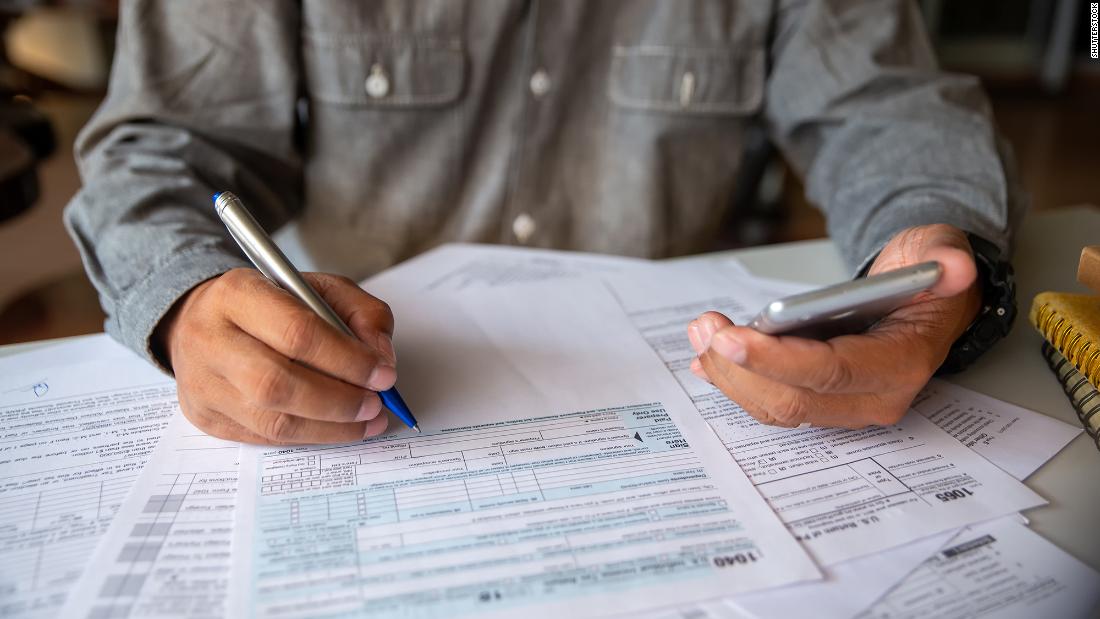
The new stimulus plan could affect your 2020 taxes. Here’s how
Here’s what we know so far.
The main provision in the latest Covid relief package that affects 2020 taxable income applies to those who received unemployment compensation last year.
That change will either decrease how much you owe the IRS or increase your refund, with the latter being most likely.
At H&R Block, for instance, “90% of our clients who are filing with unemployment compensation are getting a refund,” said Kathy Pickering, the firm’s chief tax officer.
Your federal refund may grow larger not only because the initial $10,200 in benefits is now tax free. The provision will reduce your adjusted gross income and taxable income, and that may make you newly eligible for some tax credits that require your income to be below a certain threshold, Pickering said.
The provision may also affect your state income tax return, too, if you live in a state with an income tax. That’s because states will often base their computation of taxable income using either your federal adjusted gross income or taxable income.
“Your starting point will be reduced by the [unemployment compensation] exclusion,” Pickering said.
For those who have already filed their 2020 tax returns, sit tight. “They should not file an amended return at this time, until the IRS issues additional guidance,” the agency said.
Economic impact payments
While the payments won’t affect your 2020 taxes directly, they may affect how quickly or slowly you’ll want to file your 2020 return if you haven’t already.
Here’s why: If the IRS doesn’t already have your 2020 return on file, it will base the size of the payment it sends to you on your 2019 income. So, for example, if your 2019 income was too high to qualify, but you believe your 2020 income makes you eligible, you’ll need to file your tax return in order to receive your payment.
“You may want to file your 2020 return as quickly and accurately as you can to ensure you’ve done everything you can to get the most accurate payment,” Pickering said.
That said, if you can’t file quickly and expect you’ll be owed more money, you’ll eventually get all the money that is due to you. When you file your 2020 return, the agency will automatically review your account to see if you’re eligible for additional funds and, if so, it will send you a supplemental payment.
To ensure the fastest payment, Treasury and IRS officials are urging people to file electronically and choose direct deposit for payment.
Conversely, if your 2019 income would make you eligible for a larger economic impact payment than your 2020 income, you might want to hold off filing your 2020 return for a bit.
“If the taxpayer received more than that to which he or she is ultimately entitled, it does not have to be repaid,” said Mark Luscombe, Principal Federal Tax Analyst at Wolters Kluwer Tax & Accounting.
The only exception, Luscombe said, would be if you were in a category of people who are not allowed to receive a stimulus payment in the first place, such as a nonresident alien, anyone who is claimed as a dependent on another person’s tax return or someone who has died.