

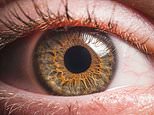
Scientists discover that eyes from organ donors could be brought back to life
Is death actually reversible? Scientists discover that eyes from organ donors could be brought back to life in major breakthrough
Eyes from donors responded to even dim light ‘the way they do in the living eye’Cells in the retina reacted to light and even communicated 5 hours after death If findings extend to the brain, we could bring back living beings from the dead Research raises question if brain death, as currently defined, is truly irreversible
<!–
<!–
<!–<!–
<!–
(function (src, d, tag){
var s = d.createElement(tag), prev = d.getElementsByTagName(tag)[0];
s.src = src;
prev.parentNode.insertBefore(s, prev);
}(“https://www.dailymail.co.uk/static/gunther/1.17.0/async_bundle–.js”, document, “script”));
<!–
DM.loadCSS(“https://www.dailymail.co.uk/static/gunther/gunther-2159/video_bundle–.css”);
<!–
Scientists have managed to bring human eyes back to life in a breakthrough that could mean death might one day be reversible.
US scientists proved photosensitive cells in the retina could still respond to light and communicate with each other up to five hours after death, sending signals ‘resembling those recorded from living subjects’.
These neurons in the retina are part of the central nervous system (CNS), which includes the brain and spinal cord, with the discovery raising the possibility that other CNS cells could also be restored.
This breakthrough could eventually lead to bringing back human consciousness from patients who have suffered brain death.
To achieve their results, the scientists designed a special transportation unit that could restore oxygen and other nutrients to eyes 20 minutes after being removed from a deceased donor.
The authors, writing in the journal Nature, said their study ‘raises the question of whether brain death, as it is currently defined, is truly irreversible’.
Cells found in the eye retina may hold the key to reversing brain death
Study lead author Dr Fatima Abbas, from the University of Utah, said: ‘We were able to wake up photoreceptor cells in the human macula, which is the part of the retina responsible for our central vision and our ability to see fine detail and colour.’
‘In eyes obtained up to five hours after an organ donor’s death, these cells responded to bright light, coloured lights and even very dim flashes of light.’
The new research goes one step further than a 2019 Yale University study which restarted the brains of 32 decapitated pigs slaughtered four hours earlier.
‘We were able to make the retinal cells talk to each other, the way they do in the living eye,’ said Dr Frans Vinberg, also of Utah.
‘This has never been achieved in the macula, and never to the extent we have now demonstrated,’ he added.
The researchers also hope the breakthrough could speed up new therapies for sight loss and improve their understanding of brain diseases.
Dr Vinberg added that researchers hoped the process the team developed to support eyes following donation could be used in other research and that more people will be inspired to donate their eyes to science.
‘The scientific community can now study human vision in ways that just aren’t possible with laboratory animals,’ he said.
‘We hope this will motivate organ donor societies, organ donors, and eye banks by helping them understand the exciting new possibilities this type of research offers.’
Brain death is a condition where a person’s brain ceases to function as a result of oxygen or blood supply being cut off.
Under UK law this means the person has died as they will never regain consciousness despite their heart and lungs continuing to work with aid of medical technology like a ventilator.