

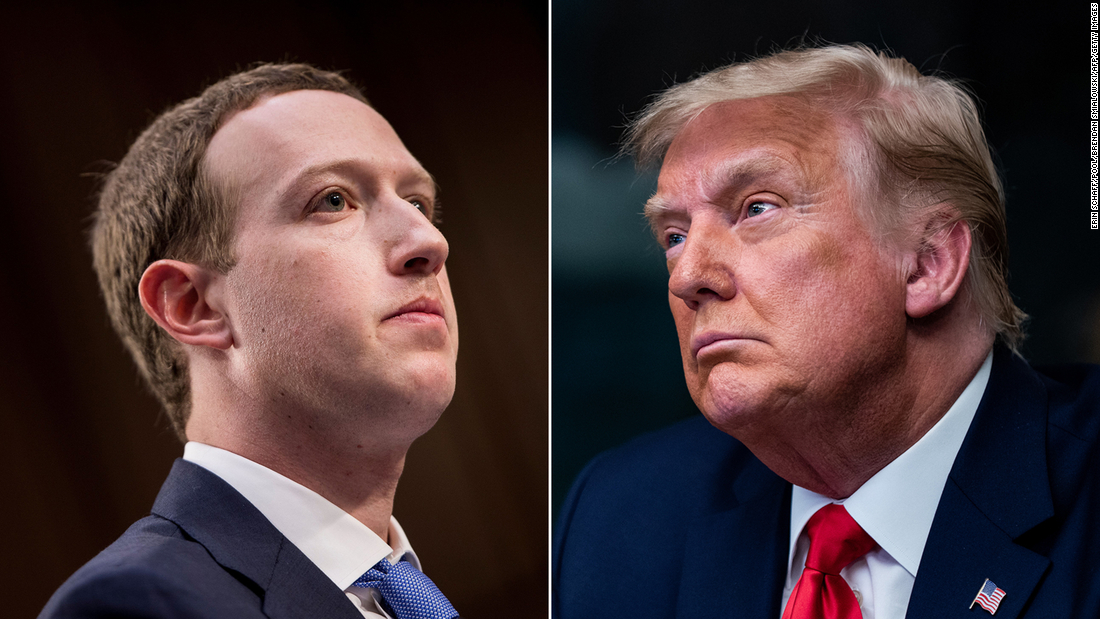
Opinion: There is more to the story of Facebook’s Trump decision
Facebook’s decision was a litmus test for social media platforms’ capacity to draw the line between the protection of free speech and public safety. But American social media users were deeply polarized long before Trump took office, and will continue to antagonize each other in the wake of this decision as well. Is there anything that we — the citizens of social media — to prevent this decision from launching yet another round of partisan warfare on social media?
Though we might like to think that Facebook, Twitter or other platforms could simply tweak some code to save us from our current predicament, these studies hint at a much more unsettling truth: the root cause of political polarization on our platforms is us. And it’s not going away until we find a way to solve it.
Though there is no single solution to defeat political polarization, my colleagues and I have identified three things everyone can do to form better habits — and we have created new technologies to assist in this process.
First, we can learn to combat false polarization, or our tendency to exaggerate extremity on the other side and minimize radicalism on our own side — making us think that political polarization is more pervasive than it really is.


Second, we must all become more introspective about our own behavior on social media — and whether it contributes to false polarization. Becoming a more reflective social media user does not simply mean tamping down our inner trolls. Instead, it requires asking ourselves more fundamental questions about how our behavior shapes the bigger picture. If we are part of the moderate majority of Americans who never posts about politics, for example, we must consider whether our lack of engagement helps fuel the fire.
Third, we can learn to find moderate voices on the other side more effectively. The idea of a moderate on social media can sometimes seem like an oxymoron, but this is because the loudest voices drown out those in the middle. In addition to learning to avoid extremists — and not feed the trolls — we also need help learning how to see the middle.
Keeping our eyes trained on the middle will be even more important during the maelstrom of hot takes, incivility and anger over Facebook’s decision about Trump. Each of our decisions about what to post, share or like in the coming days will determine whether we continue to fan the flames of partisanship or begin to have the difficult conversations about how to put ourselves back together again.
Though a bottom-up movement to counter polarization on social media will not solve all of our problems, our current predicament is not sustainable. Content moderation by the platforms has an important role to play — but we’ve spent too much of our time focused on rooting out bad behavior on our platforms and far too little thinking about how to incentivize civility and compromise.
This article has been updated to reflect the decision by Facebook’s oversight board not to readmit former President Donald Trump.