

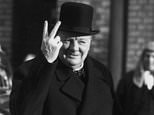
Storm as Winston Churchill charity erases his first name from website over views on race controversy
Not their finest hour: Storm as Winston Churchill charity ERASES his first name and DELETES his picture from its website over ‘controversies’ about his life and his views on race that are ‘widely seen as unacceptable’
The Winston Churchill Memorial Trust removed images of him and changed name to the Churchill FellowshipVolunteers at the trust were fuming at the move, saying it was ‘rewriting history’ and ‘cancelling’ greatest PMIt comes amid a wider move by Left-wing activists to tarnish his reputation and even compare him to Hitler
<!–
<!–
<!–<!–
<!–
(function (src, d, tag){
var s = d.createElement(tag), prev = d.getElementsByTagName(tag)[0];
s.src = src;
prev.parentNode.insertBefore(s, prev);
}(“https://www.dailymail.co.uk/static/gunther/1.17.0/async_bundle–.js”, document, “script”));
<!–
DM.loadCSS(“https://www.dailymail.co.uk/static/gunther/gunther-2159/video_bundle–.css”);
<!–
A charity named after Sir Winston Churchill has provoked fury by rebranding itself blaming his ‘views on race’ with one irate official declaring today: ‘It beggars belief that the man who saved this nation in our darkest hour finds himself cancelled in this way.’
The Winston Churchill Memorial Trust has removed pictures of the wartime leader from its website and is changing its name to the Churchill Fellowship.
The charity, which funds academic research and whose chairman is Sir Winston’s own grandson Jeremy Soames, was set up using mainly public donations after his death in 1965, amid an outpouring of grief and financial gifts from from a grateful nation who wanted to remember Britain’s greatest ever prime minister.
In 1962, Prince Philip, the Queen’s late husband, had asked the great war leader how would like to be remembered, and rather than ask for a public memorial, Sir Winston had suggested an academic scheme similar to Oxford’s Rhodes Scholarships, but ‘available to everybody’. It was set up on the day after his funeral and given Royal Patronage by Her Majesty months later.
But today it was revealed trustees have agreed to change its name to the Churchill Fellowship and erase him from its website in a new ‘woke’ storm that has sparked fury towards Julia Weston, the charity’s £100,000-a-year chief executive whose face appears repeatedly across the website when Sir Winston’s does not.
She has been accused of pursuing a ‘leftie woke’ agenda and announced the changes in an email to staff three weeks ago claiming: ‘For some time we have known that our previous name was confusing as it did not reflect what we are about.’
An official statement on the trust’s website last night said: ‘Today there is controversy about aspects of Sir Winston’s life. Many of his views on race are widely seen as unacceptable today, a view that we share’. Left-wing activists have gunned for Sir Winston Churchill for years, accusing him of racism, highlighting his links to Britain’s colonial past and even comparing him to Adolf Hitler, the evil fascist he helped defeat.
Loyal volunteers at the trust said it was ‘rewriting history’ and pointed out the former prime minister has frequently been voted the greatest Briton of all time. One said: ‘It beggars belief that the man who saved this nation in our darkest hour finds himself cancelled in this way.’
A charity named after Winston Churchill has provoked fury by rebranding itself amid concerns over his views on race. Pictured: Sir Winston and Julia Weston, the charity’s chief executive
The original Winston Churchill Memorial Trust name has been removed from the charity’s website
The Winston Churchill Memorial Trust has removed pictures of the wartime leader from its website and is changing its name to the Churchill Fellowship (pictured)
The new website has a page stating that the charity ‘stands in solidarity with those in the fight against racism and with our Fellows from minoritised racial communities’
Left-wing activists have been trying to revise thinking on Churchill recently, with some attacking statues of him and baying for his name to be wiped from buildings.
But there is a growing backlash to the movement as leading historians and his family work tirelessly to maintain his reputation.
Earlier this month the BBC was left red-faced when it was forced to partially uphold a complaint about it saying Churchill’s attitude towards the Bengal Famine was racist.
It admitted the News At Ten report fell short of its impartiality guidelines by not offering up alternative views of Churchill’s actions on the humanitarian disaster.
The war time leader saw another victory for his legacy in June when a group of ‘woke’ academics at a Cambridge college to critique Churchill was scrapped.
The lecturers and students at Churchill College is understood to have decided to disband the group after heavy pressure to cancel a series of its events.
Volunteers at The Winston Churchill Memorial Trust were left livid by the charity’s attempt to erase Sir Winston.
One told the Sun: ‘He was voted, by the people, as the Greatest Briton in a BBC poll in 2002 but is now erased from his own charity by the woke brigade.
‘You can’t imagine what he would have to say about it all but I’m sure he wouldn’t think it was Britain’s finest hour.’
Woke campaigners have long had Sir Winston and his legacy in their sights over what they perceive as his racist attitudes and policies.
Controversies surrounding his rule include whether he could have acted more decisively to prevent the Bengal Famine, which left three million dead in India in 1943.
The charge against the former PM is that he viewed the Indians as not worth saving.
His defenders say he was fighting a war at the time and acted swiftly in the circumstances to solve a problem that was not of his making.
The trust was set up after the death of Sir Winston in 1965 to help send British citizens abroad on travel scholarships known as Churchill Fellowships. Trustees include Sir Winston’s grandson Jeremy Soames and former Ipswich Town chairman David Sheepshanks.
A statement on the trust’s website last night said: ‘Today there is controversy about aspects of Sir Winston’s life. Many of his views on race are widely seen as unacceptable today, a view that we share.
‘At the same time, he is internationally admired for his wartime leadership in saving Britain and the world from Nazism. We acknowledge the many issues and complexities involved on all sides, but do not accept racism of any kind.
‘As a forward-looking charity aiming to improve lives throughout the UK, what we take from Sir Winston’s example are values for the future: global learning, public service and, above all, a belief in the potential of all individuals.’
Volunteers at the trust said it was ‘rewriting history’ and pointed out the former prime minister (pictured) has frequently been voted the greatest Briton of all time
A spokesman for the trust added the foundation remained ‘proud of our connection to him and his contribution to saving the world from Nazism’ but added: ‘At the same time, some of his views on race are widely seen as unacceptable today.’
The Fellowship scandal is not the first time Sir Winston’s name has been dragged into woke culture wars.
The BBC was forced to partially upheld a complaint blasting it over suggestions made in a News At Ten report that Winston Churchill’s attitude towards the Bengal Famine was motivated by racism earlier this month.
The corporation admitted it fell short of its own impartiality guidelines by not offering up alternative views of Churchill’s opinions on and actions with regards to the humanitarian disaster, which killed around three million people.
The offending broadcast was part of a series of reports ‘looking at Britain’s colonial legacy worldwide’.
Indian historian Rudrangshu Mukherjee of Ashoka University sparked outcry after he told BBC News at Ten in July last year that Churchill is ‘seen as the precipitator of mass killing’ due to his role in the 1943 famine.
Oxford University’s Yasmin Khan also claimed Churchill was ‘prioritising white lives over Asian lives’ by not sending aid to India, then a British colony, during the crisis.
A complainant argued the report ‘did not take proper account of the fact that Britain was engaged in a world war at the time; and it suggested the absence of effective action to alleviate the famine reflected racism on Churchill’s part’.
The BBC’s executive complaints unit (ECU) upheld this part of the complaint.
It states: ‘This bulletin included one of a series of reports introduced as ‘looking at Britain’s colonial legacy worldwide’ which dealt with the Bengal famine of 1943 in which about 3,000,000 people are believed to have died.’
It added: ‘A number of the interviewees in the report, suggested Churchill regarded Indians with a degree of disdain if not outright hostility, and the impression that this explained his behaviour was reinforced by the citation of a contemporary account reporting Churchill as having said Indians ‘breed like rabbits’.
‘It is hardly controversial to say Churchill on occasion expressed attitudes which many would now regard as evidence of racism, and the ECU thought it editorially justifiable to refer to the issue of racism in the context of a report focusing on Indian attitudes which run counter to the received view of Churchill.
‘In the ECU’s judgement, however, more exploration of alternative views of Churchill’s actions and motives in relation to the Bengal famine was required to meet the standard of impartiality appropriate to a report in a news bulletin of this kind.
‘This aspect of the complaint was upheld.’ The Bengal Famine was triggered by a cyclone and flooding in Bengal in 1942, which destroyed crops and infrastructure.
Historians agree many of the three million deaths could have been averted with a more effective relief effort, but are divided over the extent to which Churchill was personally to blame.
Yogita Limaye, the BBC News India correspondent who led the report, said many Indians blamed him for ‘making the situation worse’.
The BBC partially upheld a complaint blasting it over suggestions made in a News At Ten report that Winston Churchill’s attitude towards the Bengal Famine was motivated by racism
The corporation admitted it fell short of its own impartiality guidelines by not offering up alternative views of Churchill’s views and actions with regards to the humanitarian disaster
Last summer Black Lives Matter activists attacked the Churchill statue in Parliament Square and smeared graffiti on it
But historians suggested the report attributed too much of the blame on to Churchill when other factors were more significant.
Tirthankar Roy, a professor in economic history at the LSE, argues India’s vulnerability to weather-induced famine was due to its unequal distribution of food.
He also blamed a lack of investment in agriculture and failings by the local government.
‘Winston Churchill was not a relevant factor behind the 1943 Bengal famine,’ he told The Times in July.
‘The agency with the most responsibility for causing the famine and not doing enough was the government of Bengal.’
Churchill has been blamed for down-playing the crisis and arguing against re-supplying Bengal to preserve ships and food supplies for the war effort.
However, his defenders insist that he did try to help and delays were a result of conditions during the war.
They point out that after receiving news of the spreading food shortages he told his Cabinet he would welcome a statement from Lord Wavell, the new Viceroy of India, about how he planned to ensure the problems were ‘dealt with’. He then wrote a personal letter urging the Viceroy to take action.
The historian James Holland also weighed into the row.
He said Churchill faced immense difficulties supplying Bengal due to the amount of British resources tied up in the fight against the Japanese in the Pacific.
He tweeted: ‘In light of the latest furore over the Bengal Famine and people wrongly still insisting it was Churchill’s fault, here’s this on the subject.
‘His accusers don’t a) understand how the war worked, or b) that his hands were tied over use of Allied shipping.’
Sir Max Hastings, the military historian, accepted that Churchill’s behaviour was a ‘blot on his record’ but argued it should be considered against his achievements in helping to defeat fascism.
Meanwhile academics and students at Churchill College decided to disband a group railing against him after pressure to cancel a series of its events, it is understood.
The Working Group was to examine the former PM’s views on race – but was accused by critics of being stacked with left-wing academics intent on smearing him.
It held an event called ‘The Racial Consequences of Churchill’, during which a panellist said wartime leader Sir Winston was the ‘perfect embodiment’ of ‘white supremacist philosophy’.
The event also included claims that the British Empire was ‘far worse than the Nazis’.
Sir Nicholas Soames, Churchill’s grandson, accused the group of ‘trashing’ the wartime leader’s reputation and suggested the college should not be allowed to use his grandfather’s name if it continues to ‘smear’ it.
Churchill biographer Andrew Roberts had also accused the college of ‘clearly premeditated malice and character assassination’ of the former Prime Minister.
Controversial academic Priya Gopal, a member of the group, claimed she said the group might as well ‘disband’ after the college became ‘rattled’ from the event.
But she claimed this had not happened and the college instead dissolved the group in June.
Following the scrapping, Prof Gopal launched into a furious Twitter tirade at the ‘entirely white’ College Council and said it has an ‘institutional’ problem when it comes to ‘race’.
But College Master Dame Athene Donald said she believed the Working Group had disbanded itself after taking the professor’s comment at ‘face value’.
Last summer Black Lives Matter protesters daubed his statue in parliament Square with the words ‘is a racist’ under the ‘Churchill’.
It led to widespread outrage and other statues being boxed-in for subsequent demonstrations.
Meanwhile visitors to his former Kent home Chartwell are given warnings over his links to the slave trade and colonialism by the current owners the National Trust.